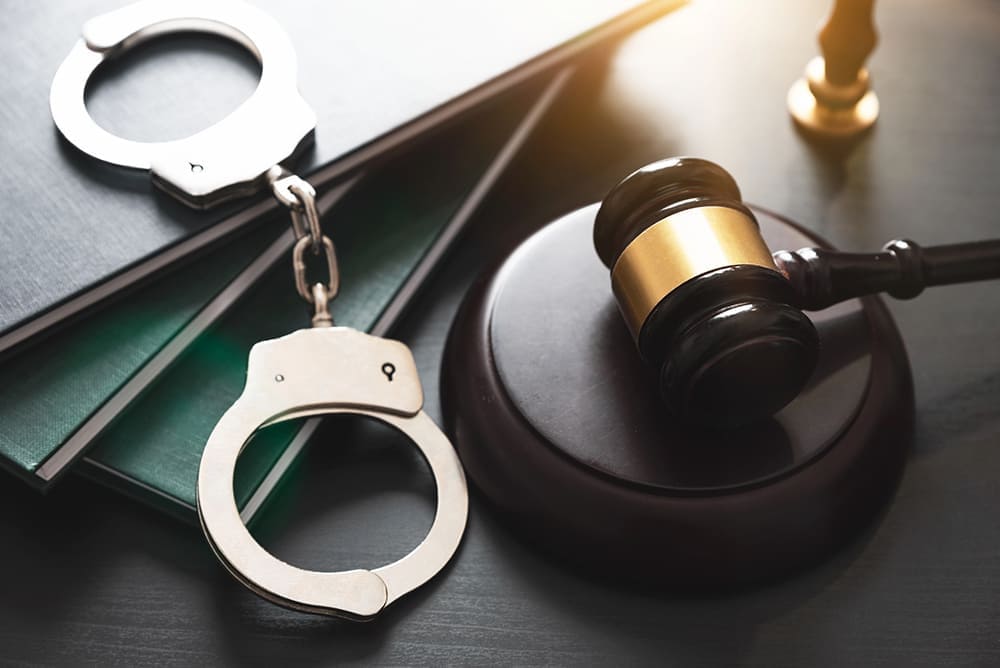
Various professional licensing boards have stringent legal and ethical standards that license holders must comply with. Even a criminal conviction or charge can adversely affect your ability to practice and lead to disciplinary actions, like license suspension, revocation, fines, and reprimands. At Orange County License Attorney, we understand a lot is at stake and can help you assess the impact of a criminal charge on your career. We can also guide you throughout the process and help you protect your career.
When a Conviction Leads to Professional Discipline and How a Conviction Affects Your Professional License
According to the California Business and Professions Code (BPC) Section 490, any state licensing board may impose disciplinary action after a licensee has been found guilty of an offense related to their qualifications, duties, or responsibilities for which the board has certified them to perform.
In California, a criminal conviction, whether it is a misdemeanor or felony, can draw attention from your licensing board.
Even convictions for a DUI or domestic violence can be regarded as significantly related to many licensees’ qualifications, duties, or functions. It is an issue that often catches most licensees off guard once they agree to plead guilty or no contest in a criminal case and later discover that, based on their plea, a subsequent conviction can result in license revocation or severe restrictions. The revocation or restriction could occur even when you have negotiated a plea deal that does not lead to your conviction for a crime of moral turpitude on the assumption that your guilty plea will avoid a licensing issue with the board.
Sometimes, the licensing board can decide to investigate the underlying facts relating to your offense to determine whether to impose disciplinary action on you.
Other factors the licensing board considers when determining whether to impose disciplinary actions after your criminal conviction include the following:
- The board will consider whether your offense involves moral turpitude, which indicates significant moral wrongdoing. A mere regulatory violation cannot be as severe as any offense involving moral turpitude, but violating professional regulations will still attract disciplinary action.
- Your crime’s classification — Whether it was an infraction, misdemeanor, or felony. Any of those offenses could result in the board’s disciplinary action against you. However, the more severe the violation, the higher the chances are that the board will impose discipline, and the more severe the agency will administer it.
- Your charge’s status — If the commission of an offense resulted in your arrest or a citation from the police, but if the prosecution team did not charge you formally, you could avoid the board’s disciplinary action.
- Your practice duration — The board will consider how long you have been practicing without any formal disciplinary action before you faced criminal charges and conviction.
- Whether you have undergone any significant rehabilitation, although this can apply to drug- and alcohol-related issues.
- License type — The kind of license you have and the particular licensing agency you are dealing with also play a significant role in disciplinary hearings. Some licensing agencies or boards can be harsher than others. Medical licenses, for instance, can be suspended for felonies and sometimes even for misdemeanor accusations that are yet to be substantiated.
- The resolution of the case — The licensing board looks at your case’s resolution and how it occurred. Potential case resolutions include a guilty plea, being found guilty, being incarcerated in jail, or a judge granting probation. Other options may include a reduction of charges and lighter sentencing due to mitigating factors, diversion, deferred entry of judgment, alternative sentencing, or dismissal of charges as unsubstantiated, with a verdict of innocence at a jury trial.
How Your Licensing Board Discovers Your Criminal Conviction
The channels that the licensing board can use to find out about your conviction include the following:
Department of Justice (DOJ) Reports
The DOJ keeps records of those arrested and prosecuted within California. The DOJ obtains information from various sources, including police departments, district attorneys’ offices, and courts. The report has all your arrests, criminal proceedings, and detentions. Therefore, the DOJ can send accurate records that prove your prior and pending criminal charges.
The DOJ submits relevant reports to various licensing agencies and employers regarding workers in diverse professional fields.
Routine Board Checks Reports
Various licensing agencies conduct regular checks with their criminal record departments each year to perform their due diligence. By doing so, your board can find new details about the criminal conviction that it might have previously overlooked. Once the licensing agency obtains and verifies your documentation, it will notify you of the discovery.
Sometimes, the agency may offer you an opportunity to respond to its discovery and present a legal defense to those claims.
Self-Reporting
Self-reporting your criminal conviction to your licensing board can have numerous potential benefits. For instance, you could use your self-reporting action as a defense during a disciplinary proceeding. Self-reporting could also attract reduced disciplinary action and a shorter suspension.
When self-reporting, you should adhere to established guidelines to avoid presenting false information about your previous criminal record. Some licensees do this to conceal their prior criminal histories. When the licensing agency discovers that, it may assume the individual was attempting to avoid liability.
Thus, a licensee can face harsher penalties and have their professional license revoked for an extended period due to the deceptive information. Ensure you provide the board with accurate details regarding the charges that led to your criminal case; your attorney can help you present the relevant facts.
Additionally, failing to disclose details of your criminal conviction during a license application could result in severe consequences, such as suspension of your existing permit or denial of your license application.
Defending your Professional License at an Office of Administrative Hearings (OAH)
Administrative hearings act as checks against any heavy-handed enforcement efforts. The hearings are meant to establish a proper balance between the following:
- Your legal entitlement to earn
- The general public’s constitutional entitlement to be safeguarded from potentially harmful experts.
The Office of Administrative Hearings (OAH) oversees the hearing procedure and handles tens of thousands of cases yearly.
The hearing resembles a small trial, with the following:
- Closing and opening remarks
- Witnesses
- Evidence
The hearings are held in specialized courthouses located in Oakland, San Diego, and Sacramento.
The administrative law judge (ALJ) is responsible for conducting administrative hearings.
The ALJ works independently and is not under the board’s authority. The ALJ is a seasoned attorney tasked with ensuring a balanced application of the law.
The administrative hearing does not have a jury.
Burden of Proof
In criminal proceedings, the prosecution wins only if it proves beyond a reasonable doubt that the accused violated a law. However, the burden of proof threshold in professional licensing cases is lower than in criminal proceedings since less is on the line and no one is facing potential incarceration.
When facing an accusation of wrongdoing and the licensing agency is attempting to strip your license of certain privileges, the board must demonstrate by persuasive proof that you are unfit to keep the professional license.
Nevertheless, when there is a statement of issues, the burden of proof is upon you. You must show your fitness to retain the professional license.
Pre-Hearing Discovery
The main work occurs before the administrative hearing. During this stage, the parties involved collect evidence to support their arguments.
The discovery procedure is less complex than other types of trials. However, you may still have access to materials that include the following:
- Witnesses’ names that the licensing board intends to summon
- Copies of relevant statements to your licensing agency’s case
- Investigate documents compiled by or for your licensing board
Proof and Testimony
In administrative hearings, the regulations concerning testimony and proof are less technical. Nevertheless, you can do the following:
- Introduce appropriate evidence
- Summon and question witnesses
- Cross-examine the licensing board’s witnesses
You are allowed to present a personal testimony during the administrative hearing, but if you decide not to, the licensing agency could still summon you to do so.
In conviction-based disciplinary hearings, you can submit evidence demonstrating the following:
- That the conviction was not substantially related to the profession
- You have undergone rehabilitative efforts for the offense
Proposed Decision
After a month following the conclusion of the administrative hearing, the ALJ can recommend a decision on the case to your licensing agency, which is known as a proposed decision.
The licensing board will then take one hundred days to determine whether to take the ALJ’s recommendation. The board may sometimes disagree with the ALJ’s decision and issue another disciplinary order.
The possible case outcomes can include the following:
- Dismissal — In a case with insufficient evidence or where the accusations are unfounded, the ALJ can dismiss the case.
- License suspension or revocation — In severe cases, the board may impose a short-term or long-term loss of your license as punishment. However, the decision can be mitigated through appeals. If the relevant authorities reduce your initial disciplinary action, you can be required to satisfy certain conditions and tasks.
- Reduction of penalties — You can negotiate a lesser sentence or disciplinary action to maintain your professional license and continue practicing your career. The reprimand could be probation or a private or public reprimand, accompanied by the requirement to enroll in specific courses.
What to Do If the Licensing Board’s Decision Is Unfavorable?
If you complete the hearing procedure without any success, you can bring a petition in Superior Court asking it to analyze and reverse your licensing board’s order.
Please note that the judge will not retry your case. Instead, they will assess available evidence to ensure you were accorded a fair hearing.
The court will determine whether the licensing agency abused its discretion by failing to adhere to the relevant regulations, by making findings unsupported by the available evidence, or by imposing disciplinary action unsupported by legal findings. The law offers legal safeguards and mechanisms to secure them. The protections help you fight for your reputation and livelihood.
Hiring a License Defense Attorney and How It Can Help You
When facing a licensing agency’s investigation following a criminal charge or conviction and subsequent proceedings, you should enlist legal representation.
Here is why you should hire a lawyer:
The Licensing Authority Does Not Advance Your Interests
The board’s role is to make sure that you maintain strict professionalism that does not endanger the public.
Therefore, the board does not hesitate to strip you of your license if they discover you have violated their professional code of conduct.
Employing a lawyer can help you protect your license and avoid additional civil suits even after facing a criminal conviction or accusation.
A Lawyer Can Assist You in Avoiding Common Legal Blunders
Once the board decides to investigate an accusation against your conduct, your actions will be scrutinized during the investigation process. However, with a lawyer, they can advise you on how to navigate the board’s investigation without making serious mistakes. Blunders to avoid include the following:
- Contacting the individual who made the criminal accusation — If you contact that person, the board may interpret your move as an attempt to harass or intimidate the complainant.
- Contacting the board’s investigator without an attorney
- Talking about the case with your family, friends, or colleagues
- Assuming that the board will safeguard your rights and proclaim you innocent
- Admitting to a fault too soon
- Failure to respond to all accusations made against you, or not responding correctly. The licensing board could interpret it as an admission of guilt.
- Failure to inform your malpractice insurance provider about the criminal charge
Preparing a Strong Defense to Fight the Complaints or Accusations Against You
Once the board discovers your criminal charges and determines that the allegation has merit, it will begin to compile evidence against you. Your attorney can help you collect evidence to challenge the accusation against you by doing the following:
- Guide you during the board investigations
- Assist you in designing a formidable response to the accusations you are facing
- Prepare a defense strategy that suits the case facts and your goals
- Represent you in negotiating an informal settlement
- Provide legal representation in the formal hearings
- Advise you on potential legal outcomes and their implications
Find an Experienced Professional License Defense Attorney Near Me
As a professional, facing a criminal charge could have repercussions that extend beyond incarceration. Your licensing board could impose disciplinary action against you after discovering the charges. Losing your license could imply losing your years of hard work and dedication, career, and financial stability, making it essential to seek legal assistance.
The Orange County License Attorney can help you navigate both the administrative process with the licensing board and the criminal judicial process. We can also work aggressively to mitigate the consequences and fight to protect your rights, career, future, and livelihood. Please contact us at (714) 782-6386 to schedule your obligation case review.